
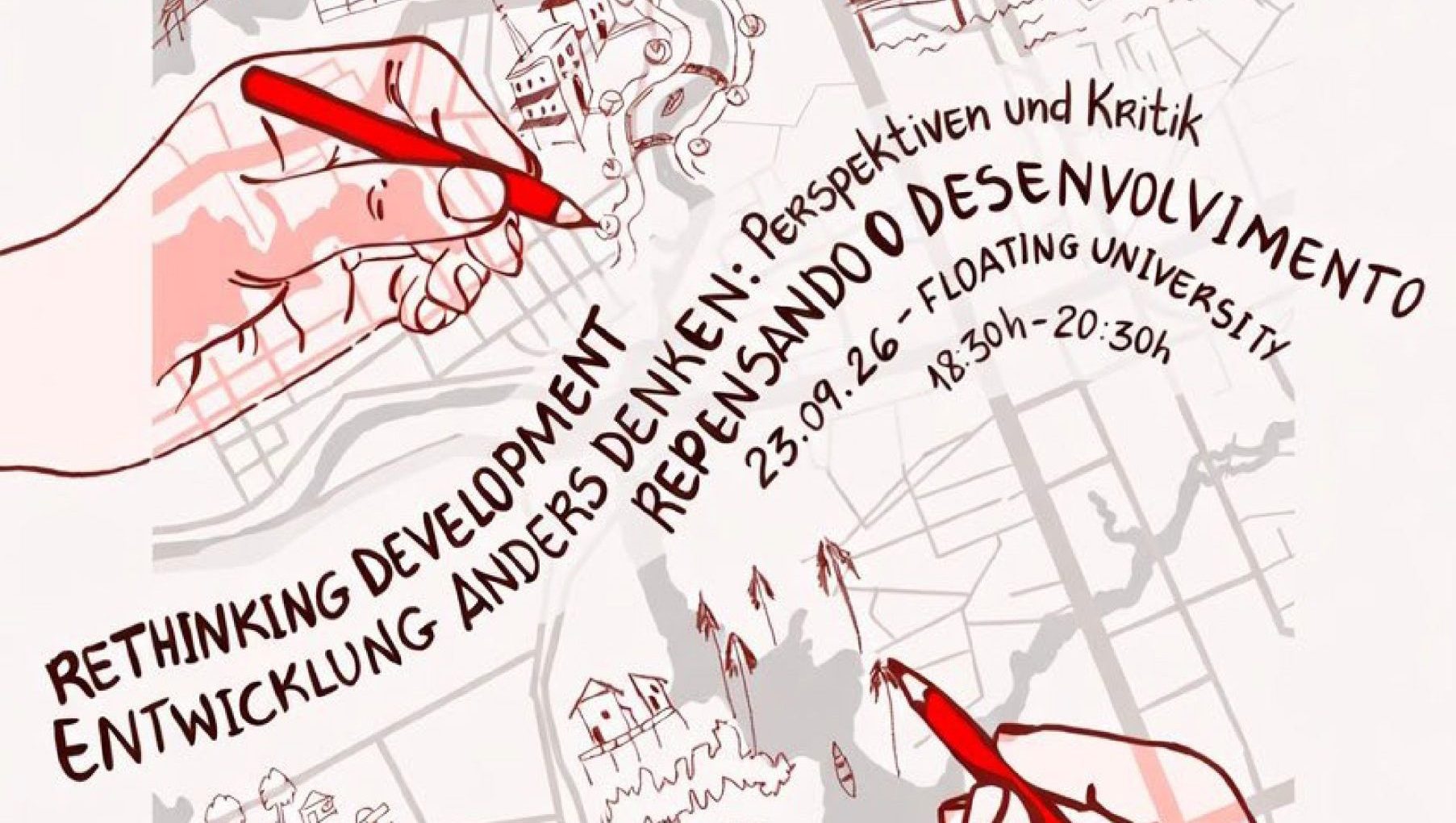
Why rethinking development matters?
As we approach 2030, the target year set to achieve the 17 Sustainable Development Goals, it is becoming increasingly clear that, in addition to geopolitical, financial and operational obstacles, there remains an epistemological inconsistency – whether intentional or not – in the very understanding of what is meant by development and, more broadly, by sustainable development. Development and sustainability are the defining terms of this century, marked by a race against time to ensure that our continued existence as humanity on this planet remains possible. However, like all languages, the meaning of these words shift in response to changing circumstances, shaping universal truths that are difficult to deconstruct.
Two Illustrative Examples
In 2014 Berlin held what was perhaps the most famous vote in its democratic history, a referendum choosing between two draft laws: the ‘100% Tempelhofer Feld’, a citizens’ initiative that proposed keeping the Feld entirely free of buildings, and the Senate’s bill, which proposed a masterplan involving buildings on the edges of the site. The citizens’ proposal won with 738,124 votes in favour, far exceeding the required quorum, with a majority in every district of the city. This was the first referendum in Berlin to produce a binding law that countered the Senate´s plans for the Feld. The Act (ThF-Gesetz) came into force on June 25, 2014, prohibiting the extension of buildings, structures and facilities on the site.
Meanwhile, in Brazil, the indigenous Munduruku people and neighbouring ribeirinho communities spent years resisting the planned São Luiz do Tapajós hydroelectric dam, overcoming decades of prior conflict between them to build a unified front in defence of their shared ecosystem around the Amazon river crossing their territories.Over the following years the communities negotiated and published a Protocol for Prior and Informed Consultation, setting out a system of representation that allows them to reject projects threatening their livelihoods or lands. Through this Protocol, in 2016, the licensing for what would have been one of the largest infrastructure projects planned for the Amazon was shelved.
Both defeated proposals, the Senate’s masterplan for Tempelhofer Feld and the São Luiz do Tapajós dam, can be, and were, justified in the name of development. Neither housing on a site in a city gripped by a shortage is, on its own terms, illegitimate, nor is a hydroelectric dam framed as clean, renewable energy in a country expanding its power supply. Both were presented as solutions, not impositions. The dispute, then, is not between development and its refusal, but between competing, at times irreconcilable, claims to what development and sustainability are for, and who has the standing to decide.
This raises some necessary questions:
• If individuals and communities understand, desire and practise different forms of development, why does a single model of development – described as universal and sustainable – continue to prevail?
• Who decides and upholds this narrative?
• Which perspectives continue to be excluded from decisions that are intended to be universal?
What is the Entwicklung anders denken – Rethinking Development project?
Building on these two different and distant socio-political achievements, the Entwicklung anders denken project proposes a series of meetings for the critical examination of the dominant development discourses. The purpose is to work towards more conscious and ethical professional stances and practices, with a particular focus on debating and seeking more legitimate and binding participatory processes.
Each session will invite two guests with professional experience in the fields of territorial and urban development, architecture, human rights, environmental protection, climate change, popular education and democracy, to share their perspectives coming from practices in diverse geographical, political, and historical contexts, reflecting the distinct ways in which “development” is defined and contested.
Following the guests’ presentations, each session will continue with working groups and conclude with a collective discussion and reflection on the day’s events, with a total estimated duration of two hours.